22/07/2026
The 14th Edition of the Warsaw Euro-Atlantic Summer Academy (WEASA 2026) Successfully Concludes
The 14th edition of the Warsaw Euro-Atlantic Summer Academy (WEASA 2026), held under the theme “Democratic Resilience in the Contested Infosphere”, successfully concluded at the College of Europe in Natolin.
This year’s Academy brought together around 30 outstanding mid-career professionals from Armenia, Azerbaijan, Belarus, Georgia, Moldova, and Ukraine. Representing journalism, civil society, academia, research, and public administration, participants took part in an intensive seven-day programme exploring influence operations, propaganda, cognitive warfare, platform regulation, AI-generated content, and the broader hybrid challenges facing democratic societies.
Throughout the programme, participants examined how states and civil societies can strengthen democratic resilience while safeguarding freedom of expression, media independence, and civic engagement. Here is the Programme of WEASA 2026.
The Academy was opened by Vice Rector of the College of Europe, Ewa OŚNIECKA-TAMECKA, who highlighted the growing impact of disinformation in today’s geopolitical environment and encouraged participants to strengthen their resilience and share the knowledge gained during the Academy within their communities.
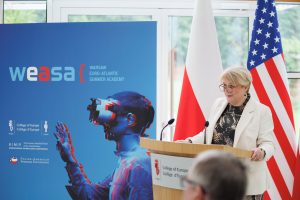
Participants were also welcomed by Radosław JASIŃSKI, Programme Director at the Polish-American Freedom Foundation, who emphasised one of WEASA’s greatest strengths: its vibrant alumni community, built over more than a decade.
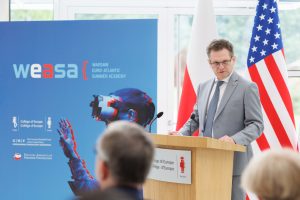
A keynote address was delivered by Ambassador Tomasz CHŁOŃ, Plenipotentiary of the Minister of Foreign Affairs of Poland for Countering International Disinformation, on “All Hands-on Deck in Countering Foreign Information Manipulation and Interference: How to Mobilise Governments and Societies?”, followed by an engaging discussion with participants.
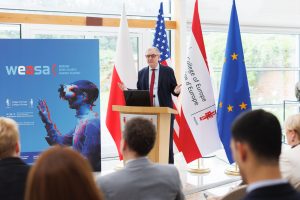
As in previous editions, panel discussions formed the backbone of the programme. This year’s debates focused on the future of the Eastern Partnership in a changing geopolitical landscape and the implications of an emerging multipolar world for global security.
Another highlight was the evening fireside chat with Dominik P. JANKOWSKI, Deputy Secretary General for Policy and Outreach at the NATO Parliamentary Assembly, who shared his reflections on NATO’s role in addressing hybrid threats.
Practical skills development remained central to the Academy. Participants strengthened their expertise through workshops on OSINT, cybersecurity, and AI-generated content, including a dedicated OSINT session delivered by the Atlantic Council’s DFRLab.
Reflecting WEASA’s strong emphasis on peer learning, participants also led country-focused SWOT analyses from a Euro-Atlantic perspective. Responding to alumni recommendations, this year’s programme introduced a new peer exchange session, creating additional space for participants to share professional experiences, discuss common challenges, and explore future cooperation.
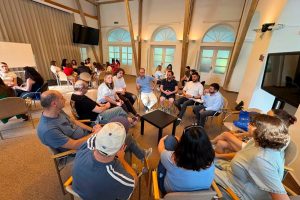
The Academy concluded with the traditional Oxford-style debate on the motion:
“This House believes that foreign interference, not internal weakness, is the main cause of democratic backsliding in the Eastern Partnership.”
The debate showcased thoughtful arguments from both sides and stimulated lively discussion on one of the region’s most pressing challenges.
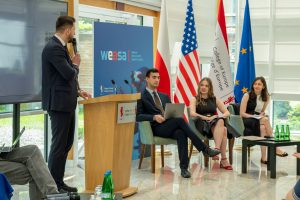
The closing ceremony was led by Marek Tabor, Head of the Executive Education Office at the College of Europe in Natolin, while WEASA Coordinator Tatevik Hovhannisyan introduced participants to the Academy’s active alumni network and opportunities for continued engagement beyond the programme.
For fourteen years, WEASA has been more than a summer school. It has become a growing community of professionals committed to strengthening democratic resilience, fostering regional cooperation, and building lasting professional networks across the region.
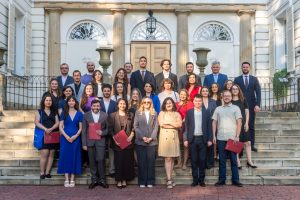
The 14th edition concluded, as always, with the traditional WEASA family photo.
WEASA is an annual summer school for mid-career professionals who are genuinely interested in geopolitics, democracy, security, and digital affairs.
WEASA was founded in 2013 in partnership by: The College of Europe in Natolin, the Polish American Freedom Foundation and the German Marshall Fund of the United States.